The AI landscape is shifting. While 2023 was the year of “Generative AI” and conversation, 2024 and beyond belong to Agentic AI – systems that don’t just answer questions, but execute complex workflows autonomously.
For CTOs and Product Owners, the challenge has moved from prompt engineering to architecting autonomy. An Agentic AI system is it is a sophisticated “digital organism” capable of perceiving its environment, reasoning through constraints, and taking corrective actions without constant human intervention.
In this blog, we explore the core components of agentic AI, explaining how they work together to enable autonomous decision-making and action, on what they are classified. How do agents perceive and interact with their environment? What drives their decisions? How can they adapt and learn over time? Here we go!
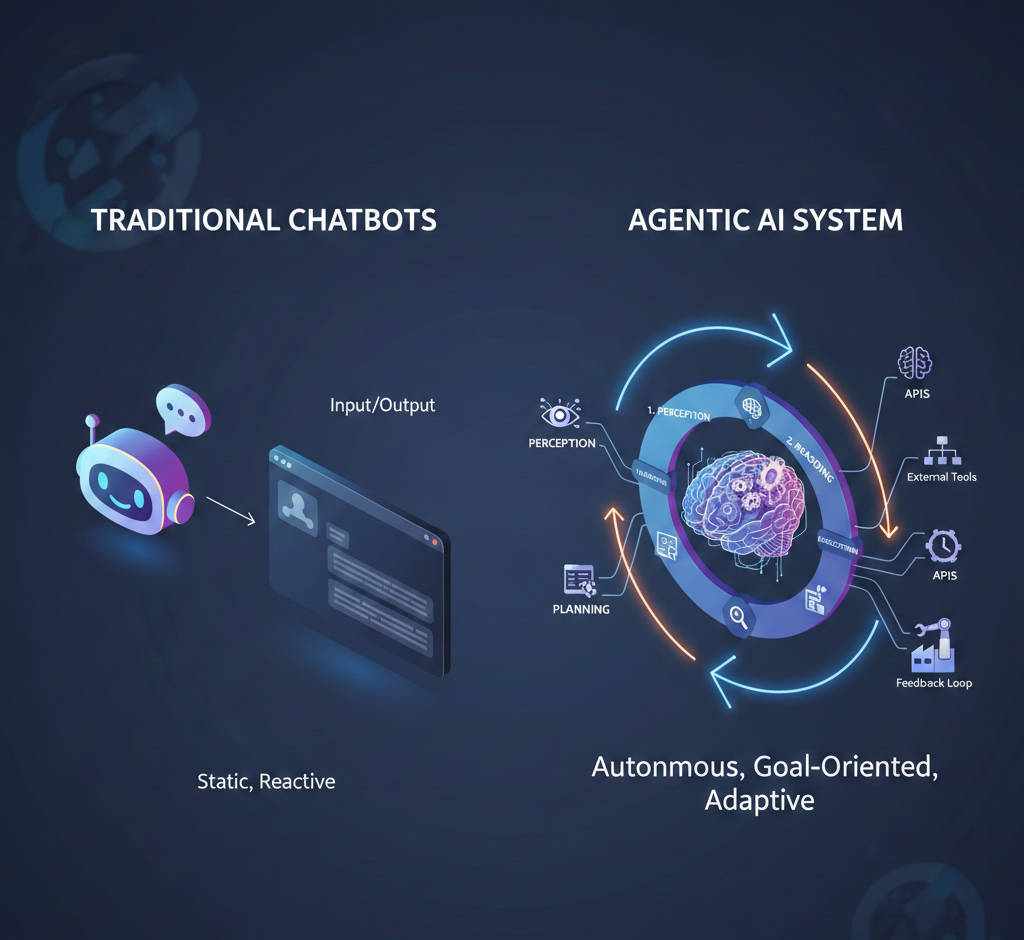
The Core Pillars: From Perception to Execution
An Agentic AI system functions like a well-coordinated orchestra. For an agent to move beyond simple “chat” and into “action,” it must master a four-stage cognitive loop. Let’s break down these pillars using a Smart Manufacturing use case.
1. Perception: The Eyes and Ears
Everything starts with data. Perception is the process of converting raw environmental inputs – whether images, logs, or sensor data – into actionable insights using Computer Vision (CV) and Natural Language Processing (NLP). On a production line, an AI agent identifies a hairline fracture in a component by analyzing high-speed camera feeds in real-time.
2. Reasoning: The Brain Behind the Decision
Reasoning is where the agent connects the dots. It doesn’t just see a defect; it understands why it happened by detecting patterns and drawing logical conclusions from its knowledge base. The system correlates the defect pattern with a specific machine’s vibration logs, concluding that a bearing is likely failing.
3. Planning: Charting the Path
Once the problem is identified, the agent strategizes. It evaluates constraints (e.g., production deadlines, spare part availability) to create a step-by-step roadmap to achieve its goal. Enterprise. The AI plans a maintenance window during a low-traffic shift and reallocates inspection resources to prevent further faulty outputs.
4. Execution & Learning: The Final Manifestation
Execution is where the strategy meets reality through API integrations or robotic control. Crucially, the loop closes with Learning – the agent records the outcome to refine its future accuracy. The agent automatically triggers a “Reject” arm to remove the defective item and updates its internal model to recognize this specific defect pattern faster next time.
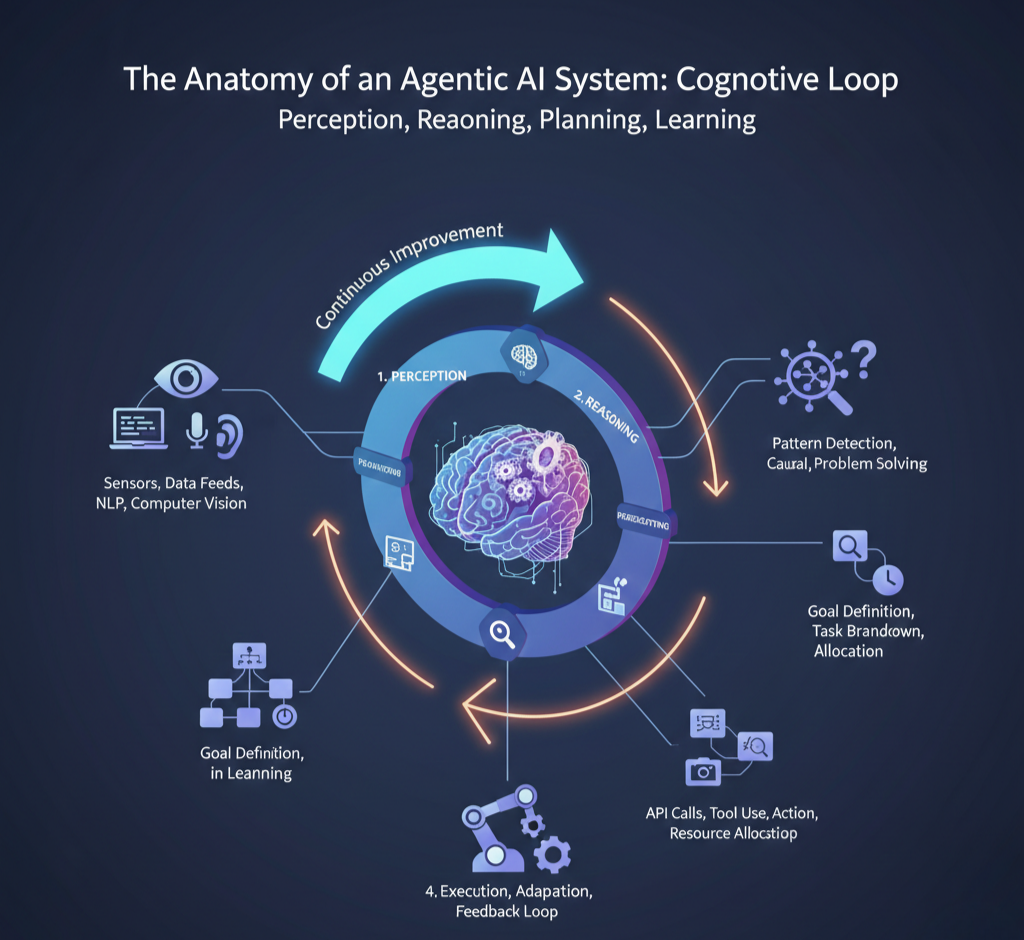
In an Agentic system, these pillars create a “Closed-Loop” architecture. Unlike traditional software that follows a fixed script, Agentic AI adapts its plan based on what it perceives in real-time.
Classifying the Anatomy of an Agentic AI System: From Simple Reflex to Utility-Based
Not all agents are created equal. Depending on the complexity of your business logic, the anatomy of an agentic AI system can vary from a basic “if-then” engine to a sophisticated objective-driven machine. Understanding these categories is essential for AI development services to ensure the right architecture matches the right problem.
The Spectrum of Agency
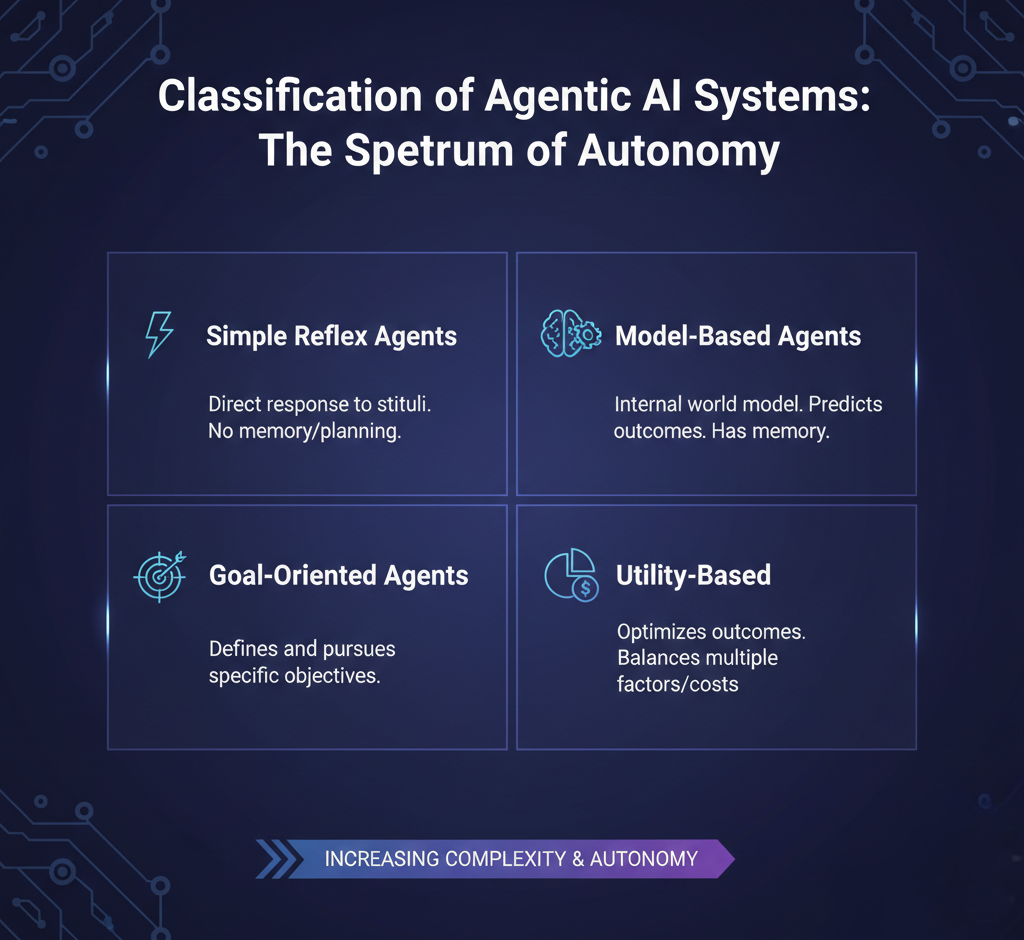
To build high-performing autonomous AI agents, we mustwe must categorize them by their decision-making logic:
- Simple Reflex & Model-Based Agents: These function as the “nervous system” of automation. While reflex agents trigger immediate actions based on current stimuli, model-based versions maintain an internal state to track history. In a retail environment, this is the difference between a bot that simply provides a tracking link and one that offers a discount because it “remembers” a customer’s previous shipping delay.
- Goal-Oriented & Utility-Based Logic: This is where the AI agent architecture moves from following rules to achieving outcomes. Goal-based agents focus on reaching a specific destination (e.g., successfully closing a support ticket), while utility-based agents go a step further by evaluating “how well” the goal is achieved. They balance trade-offs, such as choosing the fastest shipping route that stays within a specific budget, optimizing for both speed and cost-efficiency.
Functional Versatility: Hybrid Models and Atomic Building Blocks
The true power of LLM integration lies in creating Hybrid Agents. These systems bridge the gap between Reactive (instant response to threats or anomalies) and Deliberative (long-term strategic planning) behaviors. This synergy is what allows an agent to flag a real-time data breach while simultaneously recalibrating its long-term security protocols.
The Building Blocks of Autonomous AI Agents
To ensure reliability and scalability, modern systems rely on a modular “Atomic” structure. By breaking down the anatomy of an agentic AI system into specialized units, you create a more resilient ecosystem:
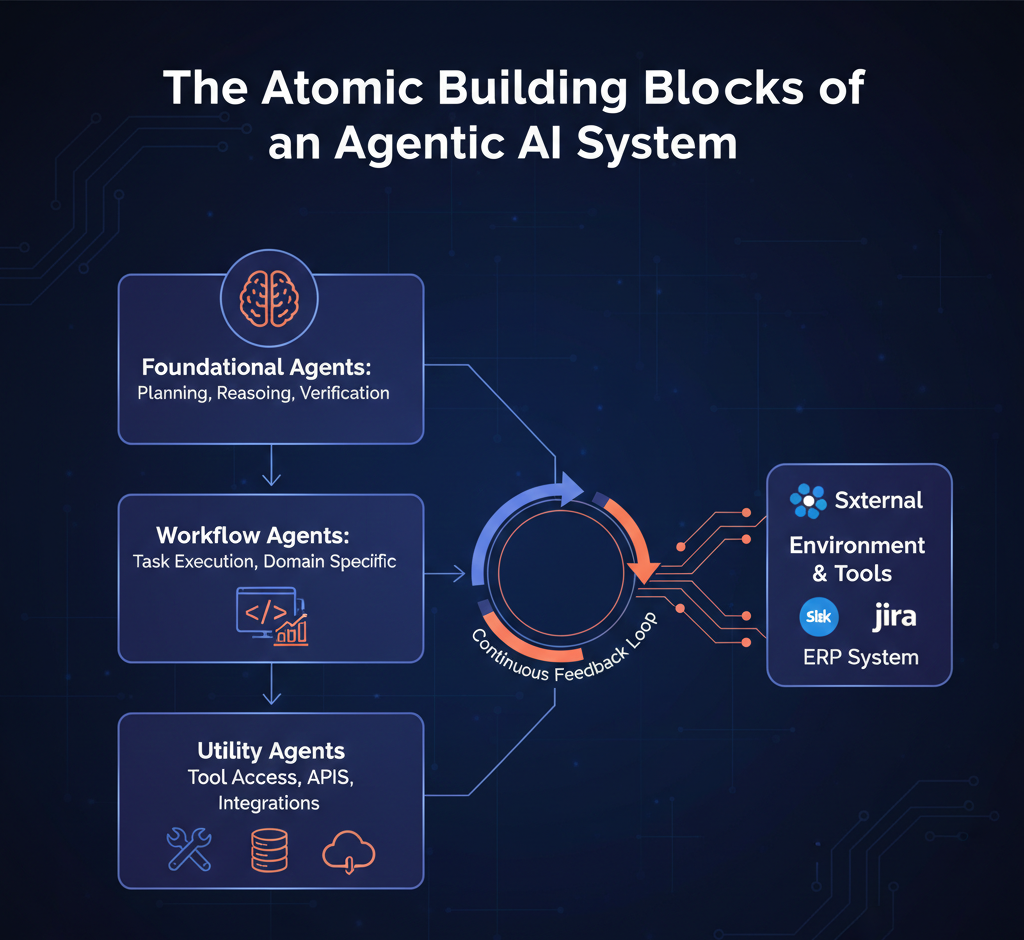
- Foundational Agents: These provide the horizontal expertise needed for planning, scheduling, and verification. Think of them as the “Project Managers” within your AI stack.
- Workflow Agents: These are vertical experts designed for high-quality execution in specific domains, such as a coding agent that generates prototypes or a legal agent that scans contracts for compliance.
- Utility Agents: These act as the connectors, linking your core intelligence to the tools your team already uses: from ERP systems to communication platforms like Slack or Jira.
By leveraging AI development services to orchestrate these atomic agents, businesses can move away from monolithic, fragile scripts toward a flexible, goal-driven workforce.
Scaling Industry Value through Vertical Agentic AI
The true ROI of a well-architected Agentic AI system is realized when it moves beyond general tasks and masters industry-specific challenges. We refer to these as Vertical Agents – autonomous systems designed with deep domain expertise rather than broad, shallow capabilities.
By leveraging the building blocks of autonomous AI agents, companies are now deploying solutions that don’t just assist humans but actively drive industrial outcomes:
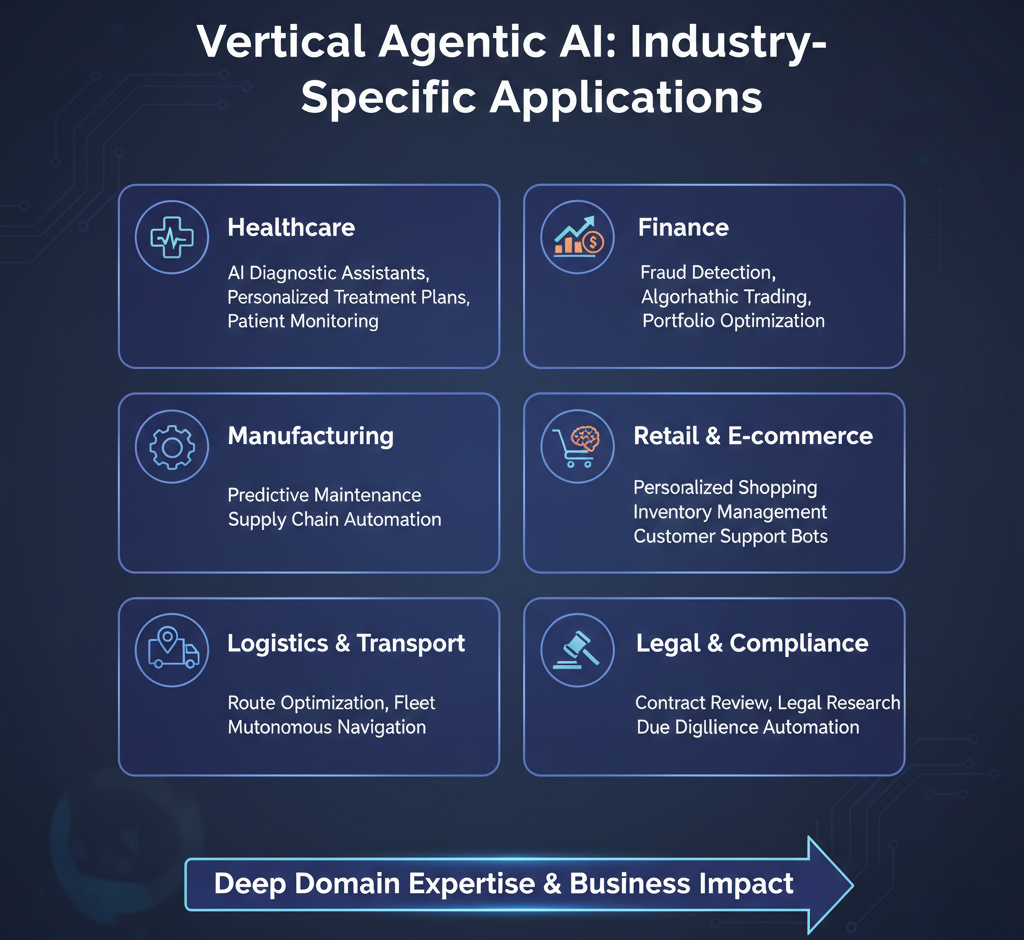
- Precision Healthcare: The AI agent architecture in medical settings is evolving from simple diagnostics to holistic patient management. These agents autonomously monitor real-time genomic data and radiology images to suggest personalized treatment plans, flagging critical anomalies to surgeons before they become emergencies.
- High-Frequency Finance: In the fintech sector, LLM integration has enabled agents that go beyond fraud detection. They act as autonomous portfolio optimizers, reasoning through global market shifts and executing trades to balance risk and return in milliseconds.
- Autonomous Manufacturing: On the factory floor, the anatomy of an agentic AI system manifests as predictive maintenance agents. These systems perceive minor mechanical vibrations, plan a maintenance window that minimizes production downtime, and automatically order replacement parts through the supply chain API.
- Adaptive Logistics & Transportation: Beyond simple route planning, agentic systems now manage entire fleets. They reactively adjust to traffic spikes while deliberatively optimizing long-term fuel consumption and delivery schedules, ensuring the entire supply chain remains fluid under pressure.
- Legal & Compliance Automation: Vertical agents in the legal field have moved from basic document search to autonomous contract analysis. They can review thousands of pages, identify hidden liabilities based on current case law, and draft executive summaries that highlight specific regulatory risks.
The Shift to Autonomy
Understanding the anatomy of an agentic AI system is the difference between a chatbot that talks and an agent that works. By mastering the loop of Perception, Reasoning, Planning, and Execution, businesses can move beyond static scripts to truly autonomous AI agents.
The future belongs to specialized, vertical architectures. Whether through AI development services or expert LLM integration, now is the time to build systems that don’t just respond, they act.
Ready to automate? Contact us to architect your first Agentic AI system today.